
"sieve size"
600 article(s) found

A brief introduction to the grading system of Kenyan Coffee beans how to brew and share Kenyan coffee at a ratio of 1 to 15
Professional coffee knowledge exchange more coffee bean information please follow the coffee workshop (Wechat official account cafe_style) front street-Kenya raw bean grading, brewing parameters sharing according to the sieve grading method is the method of grading according to the size of coffee beans. Raw beans are graded by determining the size of the beans through a holed iron plate sieve. The size of the hole in the screen is 1 inch to 64 inches.

Tanzania AA Coffee Bean Sieve size characteristics Flavor Description Taste Estate Introduction
Tanzania AA Coffee Bean Sieve size Features Flavor Description Manor Introduction Tanzania's main coffee growing area is located at the foot of Mount Kilimanjaro, which has rich volcanic soil. Coffee trees planted here are more than 100 years old. The earliest coffee was first introduced from Kenya by Christians. Coffee trees must be carefully cared for, weeded and fertilized.

From model to champion of WLAC Coffee pull Art Competition in China
Following Cafe Review (Wechat official account vdailycom) found that Beautiful Cafe opened a small shop of its own Li Qi, Mellon Champion barista, Mellon training Department Intermediate trainer, engaged in the coffee industry for 3 years. Competition experience: she won the SCAE certified barista 2016 WLAC World pull Art Competition China final champion 2016 WLAC World pull Art Competition runner-up.

On the grading of raw coffee beans
The last step in the processing of raw coffee beans is grading, so what are the grading methods of raw coffee beans? Do different countries adopt the same approach? At present, there are three main rating criteria for raw coffee beans, and different countries adopt different rating methods according to their own production conditions and national conditions (not all coffee producing countries adopt the same method).

Colombian coffee bean story features coffee bean grading? Are all Arabica beans?
What are the characteristics of Colombian coffee beans? What grade? Are all Arabica beans? [country] Columbia [treatment] washing [variety] Tibica [altitude] 1500 feet [characteristics] Colombian coffee is classified according to the size of raw beans (sieve), mainly Supremo (sieve 17) and Excelso (sieve 14amp 16); Supremo
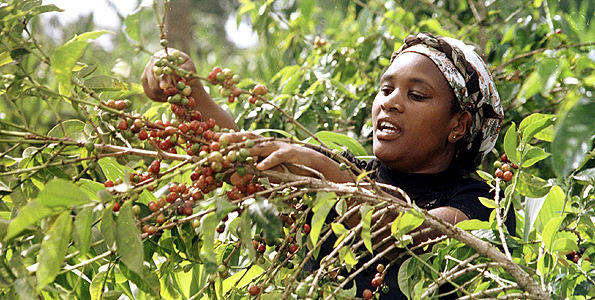
Evaluation on the quality of Coffee net Coffee Bancima was treated with sun in the primeval forest of Ethiopia.
Coffee producing countries have their own grading methods and quality evaluation criteria in order to grade their harvested coffee, of course, there are also famous coffee mochas. Like Yemen in Matali, there is no uniform export specification for the country. If the common evaluation criteria of coffee producing countries all over the world, it would be much more convenient for the buyer. Unfortunately, the current grading standard is still based on each producing country.

Is Colombian Medellin Coffee Fine Coffee? what kind of Medellin Coffee?
[country] Columbia Supremo [treatment] washing [variety] Tibica TYPICA [altitude] 1500 feet [characteristics] Colombian coffee is classified according to the size of raw beans (sieve), mainly classified as Supremo (sieve 17) and Excelso (sieve 14max 16). Supremo is Colombia's high-quality raw beans. Dried incense
Coffee bean density high altitude which producing countries grow coffee at the highest altitude
According to the coffee-producing countries, the reason for the emergence of such a classification standard according to the altitude of the coffee producing area is mainly because the quality of coffee produced at high altitude is generally higher than that at low altitude, because the temperature is low at high altitude. Slow coffee production is conducive to the accumulation of beautiful substances. And the raw beans with high maturity have good expansibility when baking, which is beneficial to baking, and the quality is more stable.

What is the difference between Kenya AA TOP and Kenya AA coffee beans?
For information, please pay attention to Coffee Workshop (Weixin Official Accounts cafe_style). When Kenya is mentioned, Kenya AA is the first thing that many enthusiasts think of, because it is the most exposed name both online and in stores. Moreover, anyone who knew a little about coffee beans knew that AA represented a high quality grade. The way beans are graded from one region to another
Grindability of hand-brewed coffee | what is the effect of fine powder on brewing coffee? should we sift out the subdivision?
Back in 2012, our own Matt Perger won the World Coffee Brewing Competition by removing fine powder with a 250m sieve. This makes the extraction more uniform, so that he can extract a higher content without producing a dry, over-extracted flavor. But from then on, he came out and declared that Fine Powder was the devil. Actually, our last one

Grading of raw coffee beans
At present, there are three main rating criteria for raw coffee beans, and different countries adopt different rating methods according to their own production conditions and national conditions (not all coffee producing countries adopt the same method). Let's introduce these three popular rating methods. One: the reason for the emergence of such a classification standard according to the altitude of the coffee producing area is mainly because of the high level.

How are raw coffee beans graded? the grading method of raw coffee beans in various countries
For the exchange of professional baristas, please pay attention to the rating methods of raw coffee beans in the coffee workshop (Wechat official account cafe_style). There are three main rating criteria for raw coffee beans, and different countries adopt different rating methods according to their own production conditions and national conditions (not all coffee producing countries adopt the same method). One: the reason for this is classified according to the altitude of the coffee producing area.
Big or small beans, which taste better?
Production sites rated large coffee beans higher according to size. It is also said that the grading of the sieve size (coffee bean size) has nothing to do with French taste. The Nordic countries, which are now coffee advanced countries, purchase the most advanced coffee beans from Brazil and other places, mainly buying small particles of beans with sieve size 13-16. They avoid buying expensive, big beans and buy cheap, small beans instead.

Is the coffee sieve necessary? What is the effect of sieving powder on cooking? The use of powder sieve
Professional coffee knowledge exchange more coffee bean information please pay attention to the coffee workshop (Wechat official account cafe_style) coffee powder sieve is necessary? What is the effect of the powder sieve on the hedge cooking? To sift out the fine powder from the coffee powder by some sieve or tea compartment means that the coffee powder has been ground more than the target number of times for the following reasons: because each coffee bean varies in size or

Graded coffee raw bean treatment
At present, there are three main rating criteria for raw coffee beans, and different countries adopt different rating methods according to their own production conditions and national conditions (not all coffee producing countries adopt the same method). Let's introduce these three popular rating methods. One: the reason for the emergence of such a classification standard according to the altitude of the coffee producing area is mainly because of the high level.

Which taste is better, big or small?
Production sites rated large coffee beans higher according to size. It is also said that the grading of the sieve size (coffee bean size) has nothing to do with French taste. The Nordic countries, which are now coffee advanced countries, purchase the most advanced coffee beans from Brazil and other places, mainly buying small particles of beans with sieve size 13-16. They avoid buying expensive, big beans and buy cheap, small beans instead.
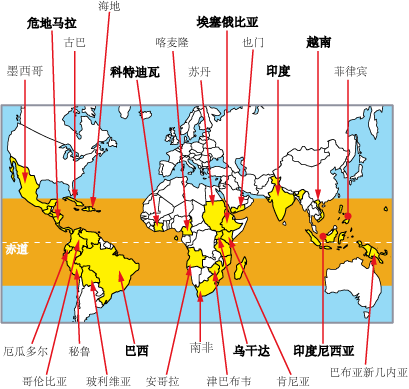
Coffee Common sense Coffee grading system summarizes the selection of classification methods in various countries to determine the altitude of coffee origin
First of all, we should know clearly that the factors that ultimately determine the flavor of coffee come from the environment of its producing area, the way of treatment and the quality of raw beans. I believe that without better raw beans, no matter how good the roaster will not bake amazing coffee. Of course, when good coffee beans are in the hands of baristas, baristas should fully understand their characteristics and then add icing on the cake.
Basic knowledge of fine coffee grading of raw coffee beans
At present, there are three main rating criteria for raw coffee beans, and different countries adopt different rating methods according to their own production conditions and national conditions (not all coffee producing countries adopt the same method). Let's introduce these three popular rating methods. One: the reason for the emergence of such a classification standard according to the altitude of the coffee producing area is mainly because of the high level.
Which is better to taste big granulated beans or small granulated beans?
Coffee beans with large particles are highly valued in the place of production according to their size. It is also said that the French taste of the sieve size (coffee bean size) has nothing to do with it. Now the Nordic countries, which are advanced coffee countries, purchase the most advanced coffee beans in Brazil and other places, mainly buying small pellet beans with a sieve size of 13-16. They avoid buying high-priced large granulated beans and buy cheap small ones instead.
Brazilian coffee bean producing area, Brazilian coffee bean grade
Following Cafe Review (official Wechat account vdailycom) found that Brazilian Coffee, which opened a small shop in Fairview Cafe, had a low sour taste, matched with the sweet and bitter taste of coffee, and had a slight grassy aroma, with a slightly bitter taste in the fragrance, smooth taste and pleasant aftertaste. There are no outstanding advantages for Brazilian coffee.